

Floating shelves look simple, but styling them well is a quiet art. Done right, they make a room feel calm, intentional, and pulled together. Done wrong, they feel cluttered fast. The good news? You don’t need a design degree to get that clean, minimalist look. You just need a few smart rules and a little restraint.
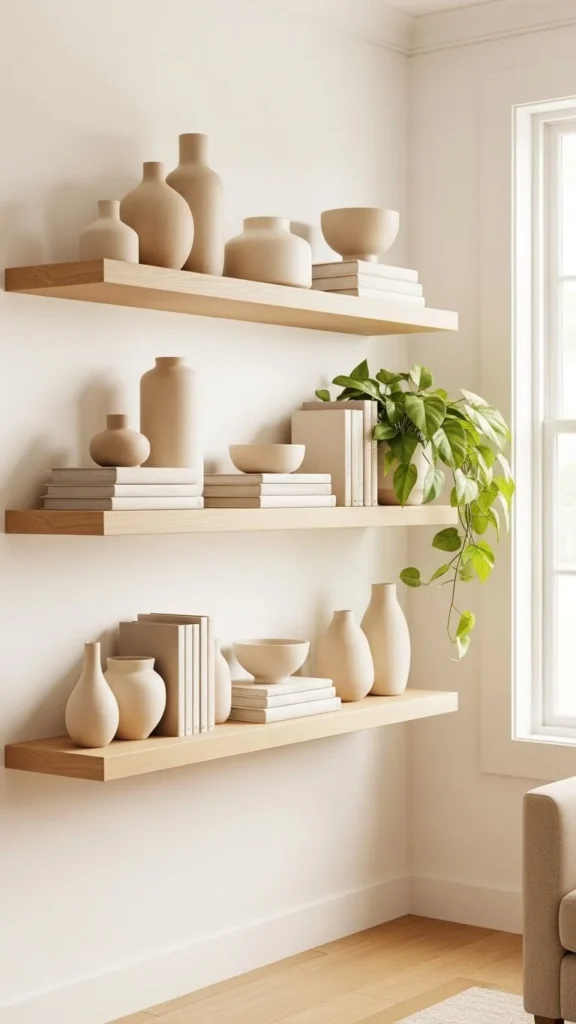
Below is a step-by-step approach to styling floating shelves the way minimalist designers do—easy, realistic, and totally achievable.
Start With a Clean, Empty Shelf
Before you style anything, take everything off the shelves. This reset matters more than most people realize. When shelves are already full, it’s hard to see what’s working and what’s just noise.
A blank shelf helps you:
- See the full length and depth clearly
- Understand how much negative space you have
- Avoid overfilling from the start
Minimalist design is about intentional placement, not filling space just because it’s there.
Quick tip:
- Wipe shelves down and remove dust first
- Stand back and view them from across the room
- Decide how many shelves you’ll actually style (you don’t need to fill them all)
Less visual pressure leads to better decisions.
Choose a Calm, Limited Color Palette
Minimalist shelves feel peaceful because the colors don’t fight each other. Pick a small palette and stick to it.
Great minimalist combinations include:
- White, beige, and light wood
- Black, gray, and soft stone tones
- Warm neutrals with one muted accent color
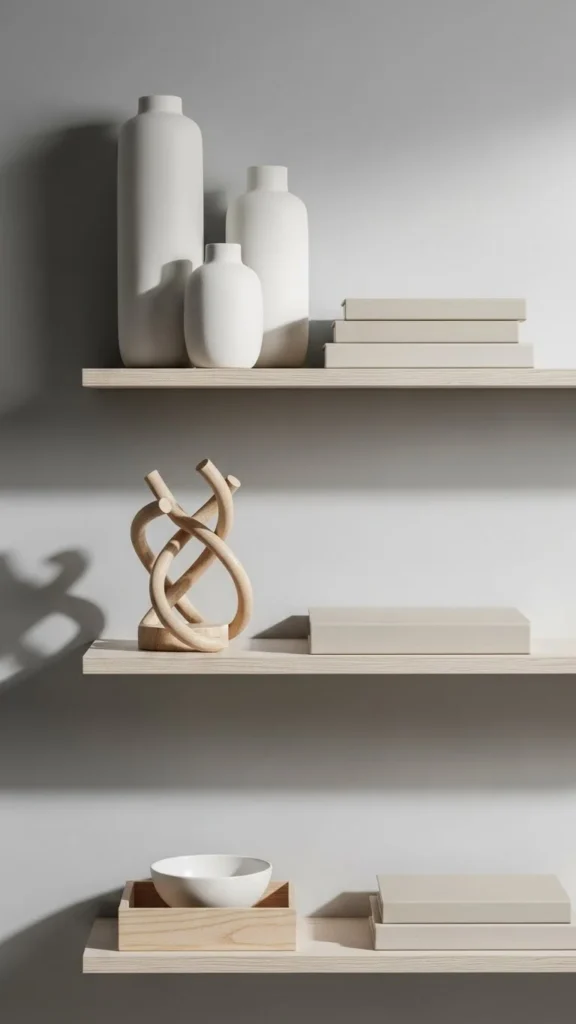
When everything shares a similar tone, the shelves feel cohesive—even if the objects are different.
Helpful guideline:
- 70% neutral items
- 20% soft contrast
- 10% subtle accent
If something feels too bold, remove it. Minimalism rewards editing.
Use Fewer Objects Than You Think You Need
One of the biggest mistakes is adding too many items. Minimalist shelves breathe because they aren’t crowded.
Aim for:
- 2–4 items per shelf
- Space between objects
- Clear shelf edges (don’t push everything back)
Try this simple formula:
- One tall item
- One medium item
- One small or flat item
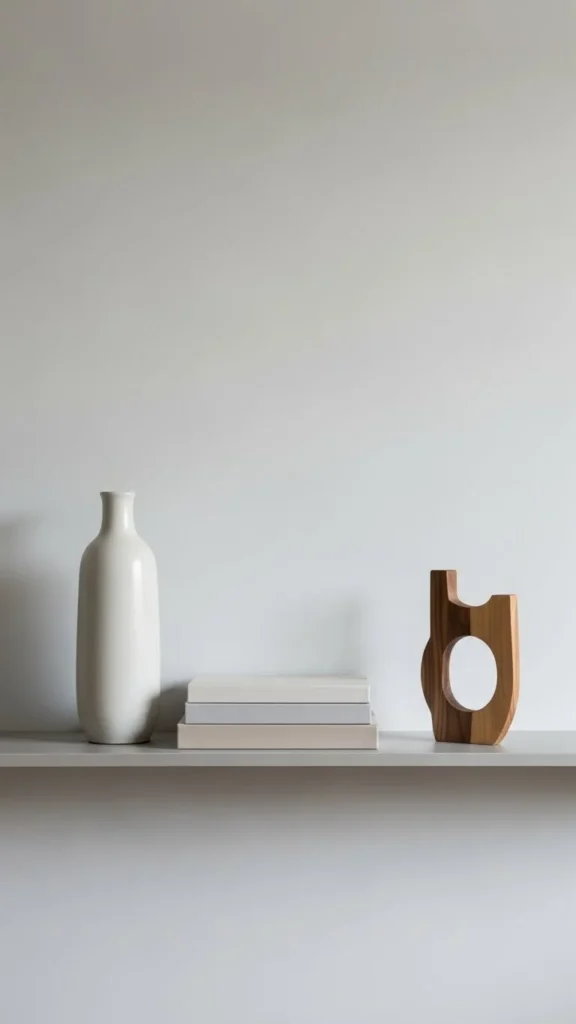
This creates visual balance without clutter.
Remember:
Empty space is part of the design. It’s not wasted—it’s working for you.
Layer Height, Shape, and Texture
Minimalist doesn’t mean boring. The interest comes from subtle contrast, not excess.
Mix:
- Tall and short pieces
- Round and angular shapes
- Smooth and slightly textured surfaces
Ideas that work well:
- A smooth vase next to a rough ceramic bowl
- Stacked books beside a curved object
- A soft fabric accent near a hard surface
Avoid:
- Matching sets
- Identical heights
- Too many shiny finishes
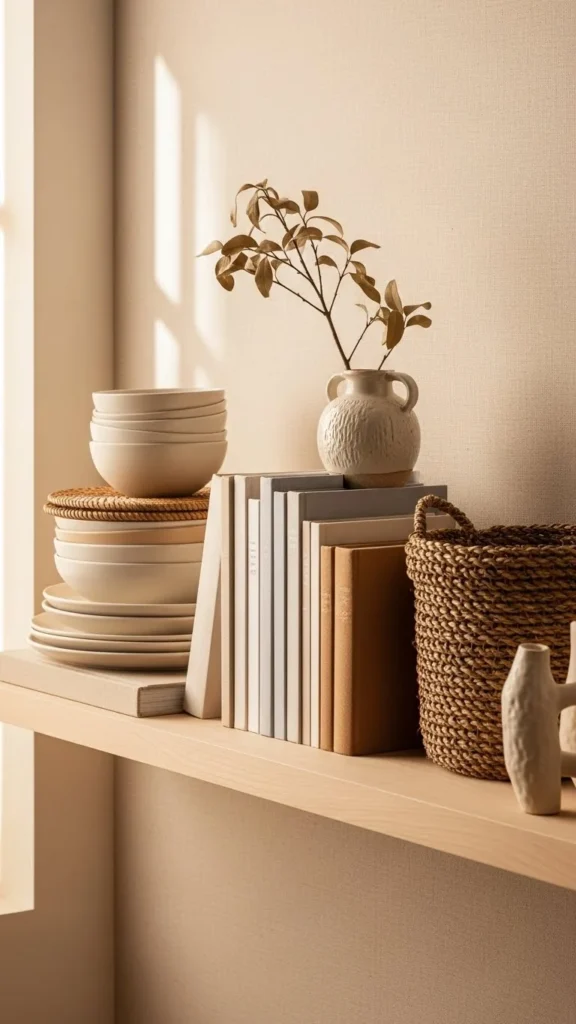
Texture keeps shelves from looking flat while still staying calm.
Style Books the Minimalist Way
Books are shelf staples—but how you use them matters.
Minimalist book styling tips:
- Choose books with neutral covers
- Stack books horizontally instead of vertically
- Use small stacks (2–4 books max)
You can:
- Place a small object on top of a book stack
- Turn book spines inward for a softer look
- Use books as height boosters, not focal points
Books should support the design, not dominate it.
Add One Natural Element for Warmth
Minimalist shelves can feel cold without something organic. One natural element softens everything.
Good options:
- A small leafy plant
- Dried stems in a simple vase
- A wood or stone object
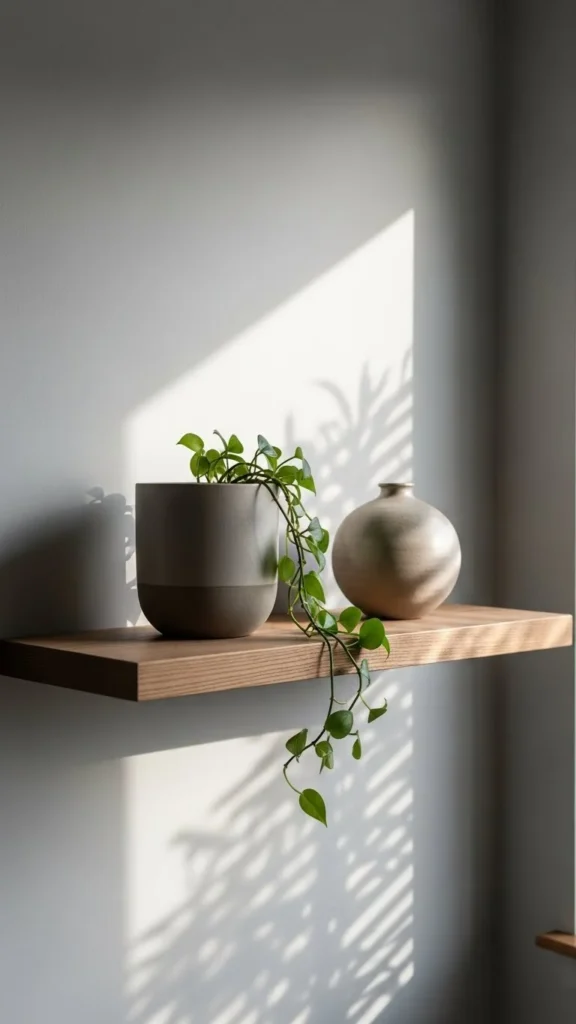
Keep it simple:
- One plant per shelf grouping is enough
- Choose clean containers
- Avoid anything overly busy
Nature adds life without visual clutter.
Step Back and Edit Ruthlessly
This is the designer secret: remove one more item than feels comfortable.
After styling:
- Walk away for a few minutes
- Come back with fresh eyes
- Take a photo and view it on your phone
Ask yourself:
- Does this feel calm?
- Is anything competing for attention?
- What can I remove without losing balance?
Minimalist shelves often look best when they feel slightly under-styled.
Final Takeaway
Styling floating shelves like a minimalist designer isn’t about buying new decor. It’s about editing, spacing, and choosing with intention. When in doubt, simplify. Let your shelves breathe, and they’ll instantly elevate the entire room.
Save this guide for later and come back anytime your shelves start feeling cluttered again.
Leave a Reply