

There’s something instantly calming about walking into a room filled with greenery. Indoor plants soften hard edges, add life to neutral spaces, and create that effortless natural vibe everyone loves. You don’t need a jungle or a green thumb to make it work—just a few smart styling choices.
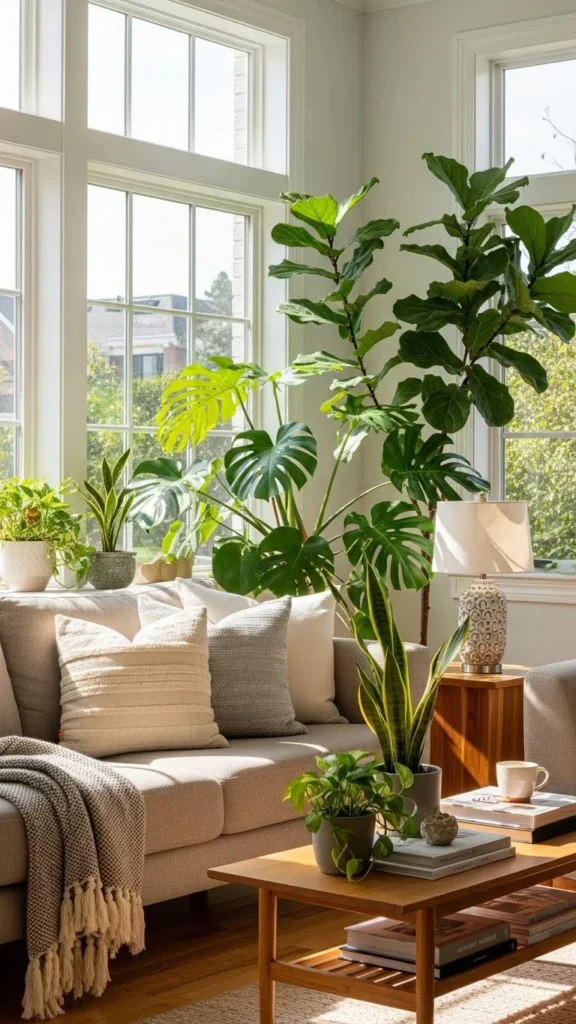
Whether you’re decorating a small apartment or refreshing a family home, this guide will show you how to style indoor plants so they feel intentional, balanced, and beautiful.
Start With the Right Plants for Your Space
Before thinking about pots or placement, focus on choosing plants that actually fit your home and lifestyle. The best-looking plant is one that stays healthy.
Consider:
- Light levels: Bright, indirect light works for most popular plants, while low-light rooms need tougher varieties.
- Room size: Large plants ground open spaces; small plants add charm to tight corners.
- Maintenance level: If you’re busy, low-care plants are your best friend.
Great beginner-friendly options include:
- Snake plants
- Pothos
- ZZ plants
- Monstera
- Peace lilies
Mix leaf shapes and sizes to avoid a flat look. Tall, upright plants pair beautifully with trailing or rounded ones.
Use Plants to Anchor Key Areas
Plants work best when they feel like part of the room’s layout, not an afterthought. Use them to visually anchor furniture and define zones.
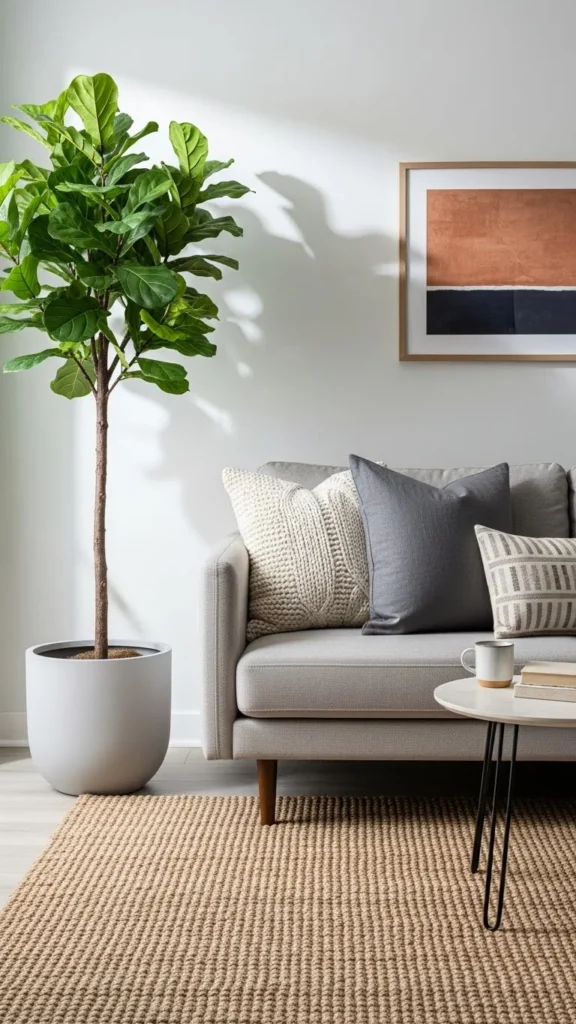
Try these placement ideas:
- A tall plant next to the sofa or armchair
- A medium plant beside a TV console or bookshelf
- Two matching plants framing a window or entryway
This creates balance and helps the room feel grounded. If something looks empty or awkward, a plant usually fixes it.
Play With Height Using Stands and Hanging Planters
Flat plant arrangements can feel boring. Varying height adds depth and makes your space more dynamic.
Easy ways to add height:
- Wooden or metal plant stands
- Hanging planters near windows
- Shelves with cascading plants
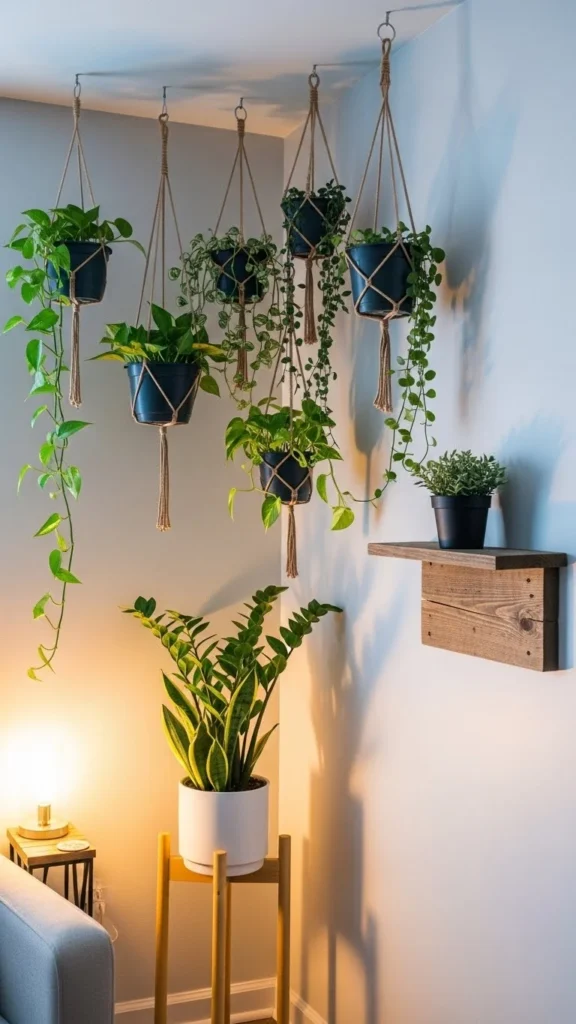
Trailing plants like pothos or philodendron are perfect for shelves and hangers. Keep taller plants on the floor and smaller ones elevated to create a layered, designer look.
Choose Pots That Match Your Decor Style
Pots are just as important as the plants themselves. The wrong pot can clash, while the right one ties everything together.
Popular pot styles:
- Neutral ceramic for minimal or modern homes
- Terracotta for warm, earthy spaces
- Woven baskets for cozy or boho vibes
- Matte black or white for clean, modern looks
Stick to a consistent color palette, but vary textures to keep things interesting. This makes your plant collection feel curated instead of random.
Create Mini Plant Moments (Not Just One Big Plant)
Instead of relying on one statement plant, sprinkle smaller plant moments throughout your home. This spreads that natural vibe from room to room.
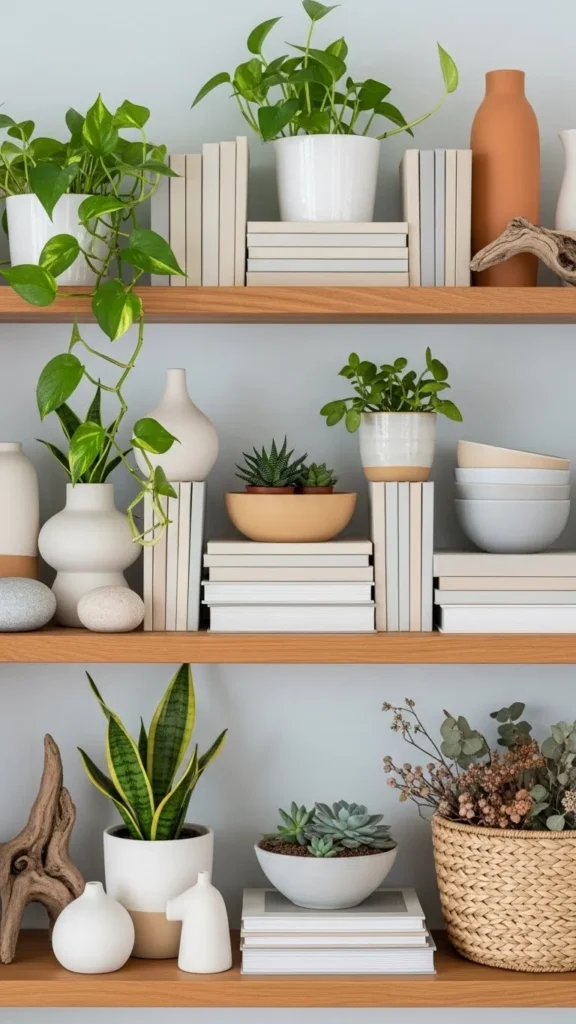
Ideas to try:
- A trio of small plants on a windowsill
- One plant mixed with books and decor on shelves
- A small plant on a bedside table or bathroom counter
These little touches make your home feel fresh and thoughtfully styled without overwhelming the space.
Balance Greenery With Natural Materials
Plants shine even more when paired with natural textures. Wood, linen, stone, and woven elements enhance the organic feel.
Pair plants with:
- Wooden furniture
- Rattan or cane accents
- Linen curtains or cushions
- Neutral rugs
Avoid crowding plants next to too many bold colors or shiny surfaces. Let the greenery breathe so it feels calm and intentional.
Keep It Fresh With Simple Care Habits
Healthy plants always look better than perfectly styled but struggling ones. A little routine goes a long way.
Simple tips:
- Water consistently (not too much)
- Dust leaves occasionally for a healthy shine
- Rotate plants so they grow evenly
- Trim yellow leaves to keep things tidy
When your plants thrive, your space automatically feels more alive.
Final Takeaway: Let Plants Do the Heavy Lifting
Decorating with indoor plants is one of the easiest ways to transform your home. They add color, texture, and life—without needing a full redesign. Start small, layer thoughtfully, and let your space grow naturally over time.
Save this guide for later and start building your own indoor oasis today!
Leave a Reply