

There’s something quietly magical about a Scandinavian room done right. It doesn’t shout for attention. Instead, it invites you in. Soft light, warm textures, and a calm sense of balance make the space feel like a deep exhale at the end of a long day. Hygge isn’t about trends or perfection—it’s about comfort, connection, and feeling at home.
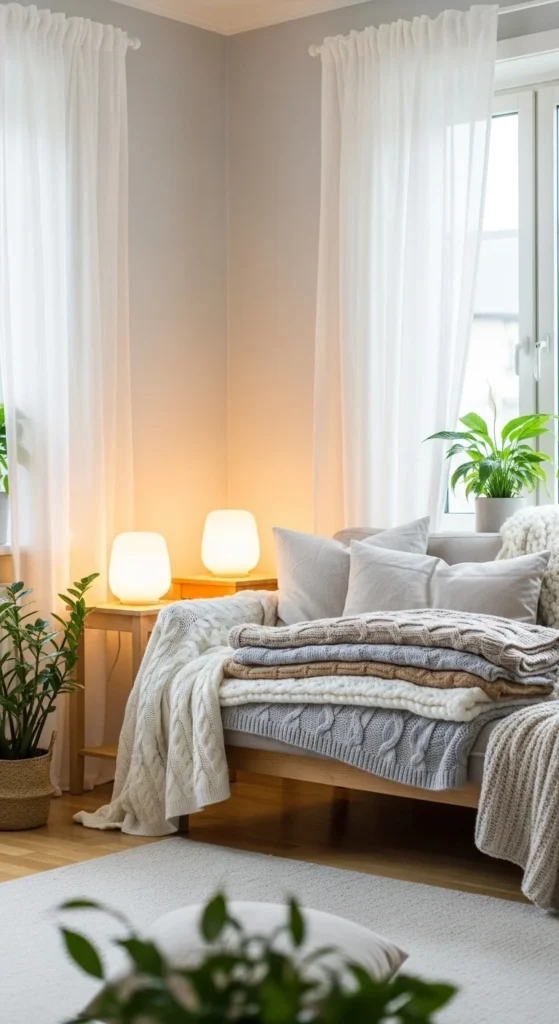
The good news? You don’t need a full remodel to get that hygge feeling. A few thoughtful choices can completely shift the mood of your room.
Start With a Soft, Neutral Color Palette
Scandinavian design begins with calm. Walls, floors, and large furniture pieces usually stay light to reflect natural light and keep the space feeling open.
Think:
- Warm whites
- Soft beige
- Pale gray
- Muted taupe
Avoid stark, icy whites. Hygge leans warm, not cold. If repainting isn’t an option, introduce these tones through slipcovers, curtains, or area rugs.
Quick tip: Layer similar shades instead of mixing bold colors. This keeps the room visually peaceful and cohesive.
Layer Textures for Instant Warmth
A hygge room never feels flat. Texture is what makes minimalism feel inviting instead of bare.
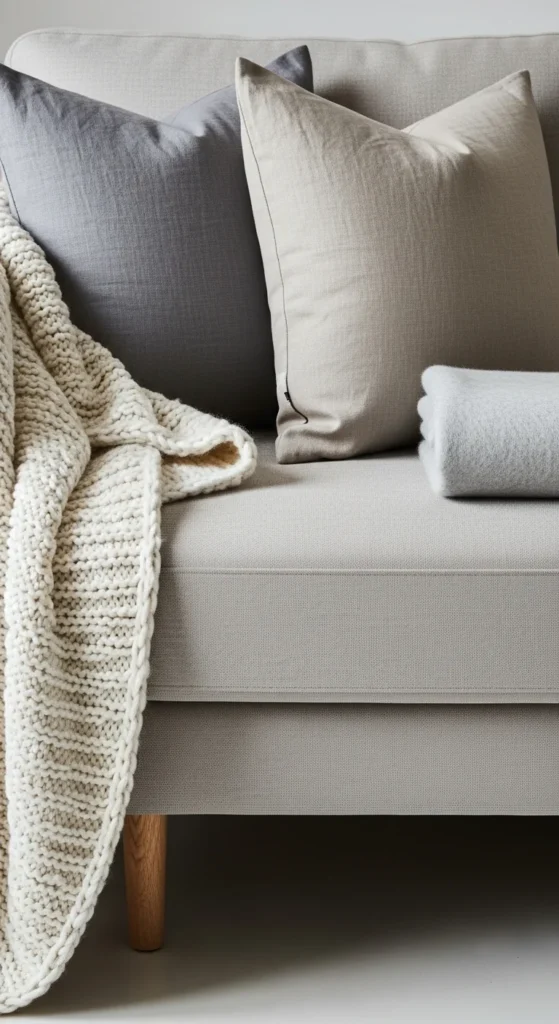
Add texture with:
- Chunky knit or woven throws
- Linen or cotton pillow covers
- Wool or jute rugs
- Natural wood accents
Mix smooth and cozy materials together. A sleek wooden coffee table feels warmer when paired with a soft rug underneath. A simple chair becomes inviting with a draped throw.
You don’t need a lot—just enough to make the space feel lived-in.
Embrace Warm, Gentle Lighting
Lighting is one of the most important elements of hygge. Overhead lights alone won’t cut it.
Instead, aim for layers of soft light:
- Table lamps
- Floor lamps
- Wall sconces
- Candles (real or LED)
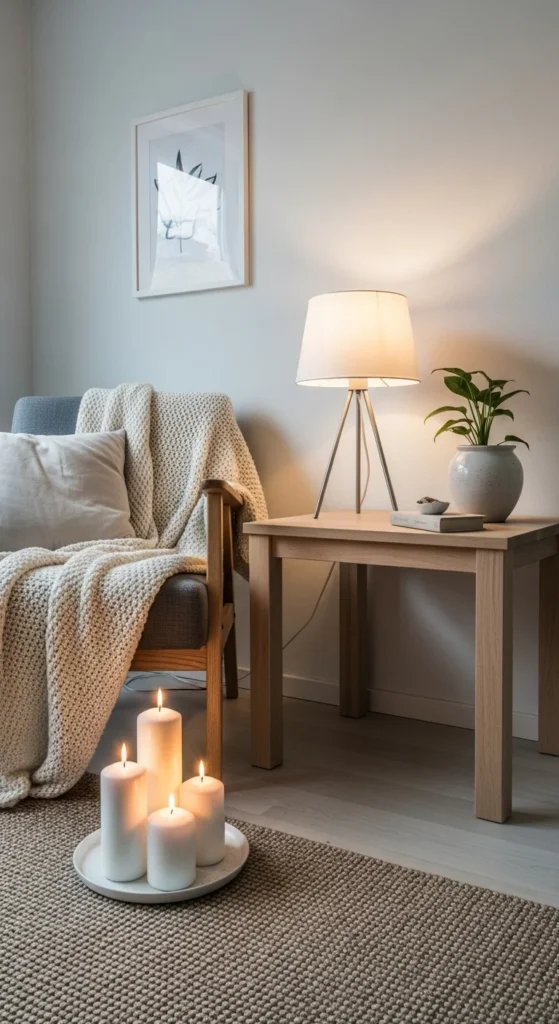
Choose bulbs with a warm glow rather than bright white. Light should feel calming, especially in the evening.
Styling trick: Place lamps at different heights around the room to create a cozy glow instead of harsh shadows.
Keep Furniture Simple and Functional
Scandinavian furniture is all about clean lines and purpose. Every piece should earn its place.
Look for:
- Light or medium wood finishes
- Slim legs that keep furniture feeling airy
- Simple silhouettes without heavy ornamentation
Avoid overcrowding. A hygge space has room to breathe. If a piece doesn’t serve comfort or function, consider removing it.
Budget-friendly idea: Thrifted wooden furniture can easily fit the Scandinavian look with a light sanding or simple styling.
Bring Nature Indoors (In a Subtle Way)
Nature plays a quiet but powerful role in Scandinavian interiors. You don’t need a jungle—just a few natural touches.
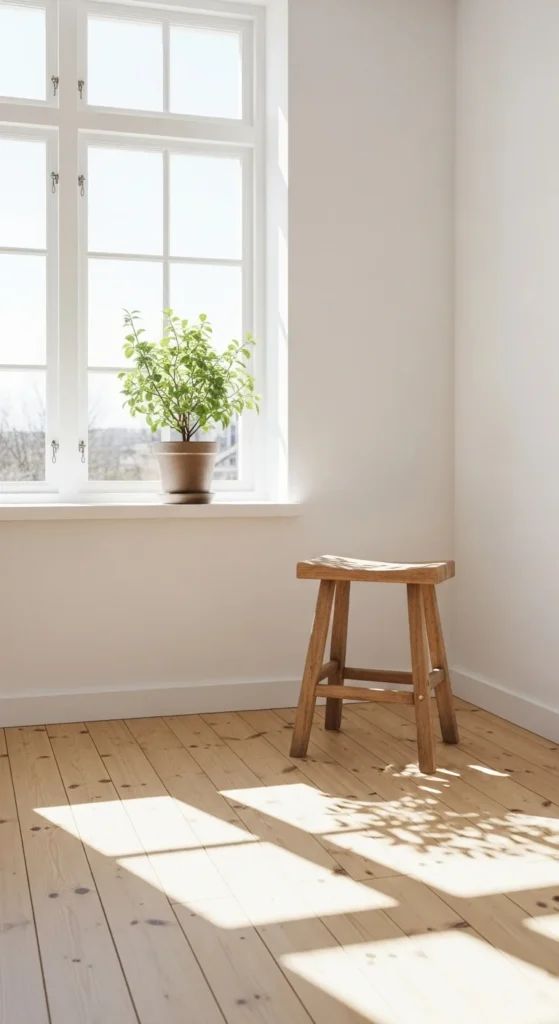
Easy ways to add nature:
- A small potted plant or dried stems
- Wooden bowls or trays
- Stone or ceramic decor
- Woven baskets
Stick to simple greenery with clean shapes. Too many plants can overwhelm the calm aesthetic.
Create Cozy Moments, Not Perfect Spaces
Hygge isn’t about magazine styling. It’s about how the room makes you feel.
Think in terms of moments:
- A chair by the window with a soft blanket
- A coffee table with a book and a candle
- A bench with cushions near the entry
These little setups invite you to slow down and enjoy the space.
Ask yourself: Where would I naturally want to sit, rest, or unwind here?
Keep Decor Meaningful and Minimal
Scandinavian rooms avoid clutter, but they’re not empty. Decor is intentional.
Choose:
- A few framed prints or photographs
- Handmade or ceramic pieces
- Items with personal meaning
Group decor in odd numbers and leave negative space around them. This helps each piece stand out without feeling busy.
The Final Hygge Touch: Comfort First
Before you call the room finished, do one last check. Sit down. Turn on the lamps. Wrap up in a throw.
Does the room feel calm? Inviting? Easy to relax in?
If yes, you’ve done it right.
Hygge isn’t something you decorate for others. It’s something you create for yourself.
Save this guide for later and come back to it whenever your space needs a little extra coziness.

Leave a Reply