

A gallery wall can instantly turn a plain room into a space with personality, warmth, and intention—but only if it’s done right. When it works, it feels curated and balanced. When it doesn’t, it can feel cluttered or random. The good news? You don’t need an interior designer or a big budget to get that polished, magazine-worthy look. With a little planning and a few smart tricks, you can create a gallery wall that looks thoughtfully designed and totally personal.
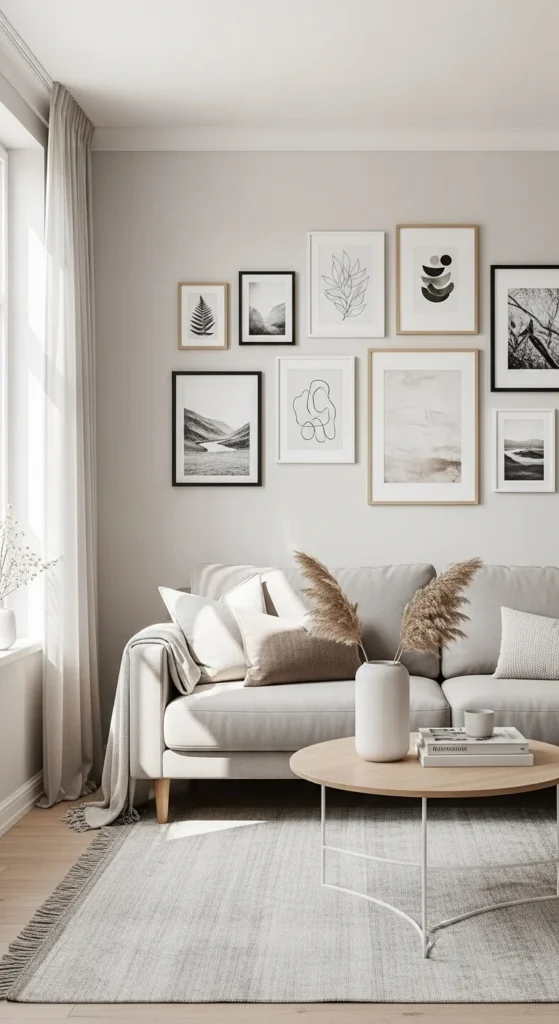
Start With a Clear Vision
Before you hang a single frame, decide what kind of mood you want your gallery wall to create. A professional-looking wall always has a clear direction.
Ask yourself:
- Do I want it to feel modern, cozy, minimal, or eclectic?
- Will it be bold and high-contrast, or soft and neutral?
- Is it meant to be a statement or a subtle backdrop?
Choose a theme that guides your decisions. This could be:
- A consistent color palette
- A single art style (photography, line art, abstracts)
- A mix of personal photos and art prints with a shared tone
Having a vision keeps you from buying random pieces that don’t work together later.
Choose the Right Wall (Size Matters)
Not every wall is ideal for a gallery display. Professionals always consider scale first.
Good spots include:
- Above a sofa or console table
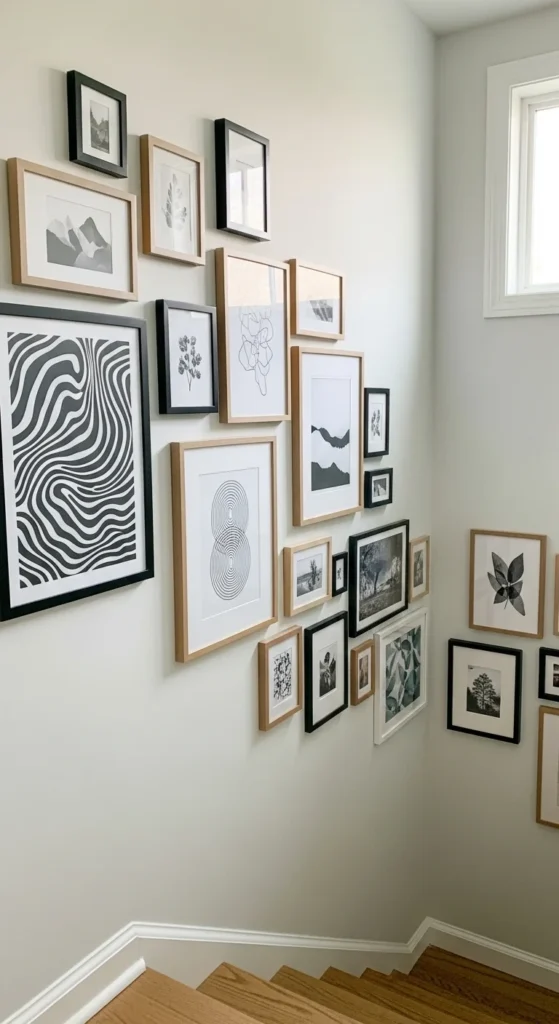
- Along a staircase
- In a hallway or entryway
- On a large, empty bedroom wall
Avoid tiny or cramped areas where frames will feel crowded. The wall should have enough breathing room so the arrangement feels intentional, not forced.
Plan the Layout Before Hanging
This step is what separates “DIY” from “designer.” Never start hammering without a plan.
Try this easy method:
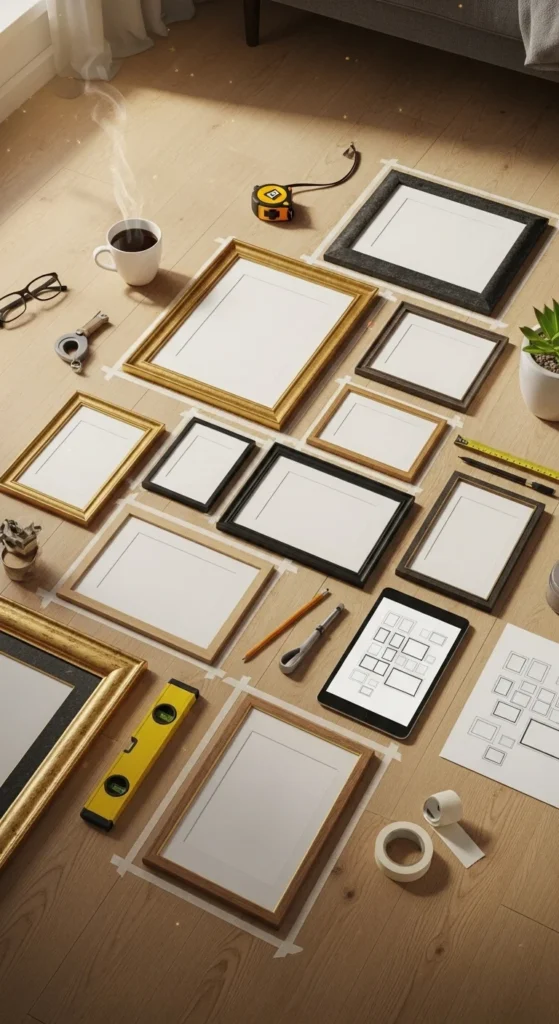
- Lay all your frames on the floor.
- Experiment with spacing and placement.
- Keep gaps between frames consistent (about 2–3 inches works well).
- Take a photo once you like the arrangement.
Popular professional layouts include:
- Grid-style: Clean, structured, and modern.
- Organic layout: Relaxed and creative, with varied sizes.
- Centered anchor: One large piece in the middle, smaller ones around it.
Once finalized, trace the frames on paper or use painter’s tape on the wall to map everything out.
Mix Frames, But Keep Them Cohesive
Gallery walls look best when there’s variety—but not chaos. Designers mix frames while keeping one unifying element.
You can mix:
- Frame sizes
- Frame materials (wood, metal, matte)
- Portrait and landscape orientations
To keep it cohesive:
- Stick to 2–3 frame colors max.
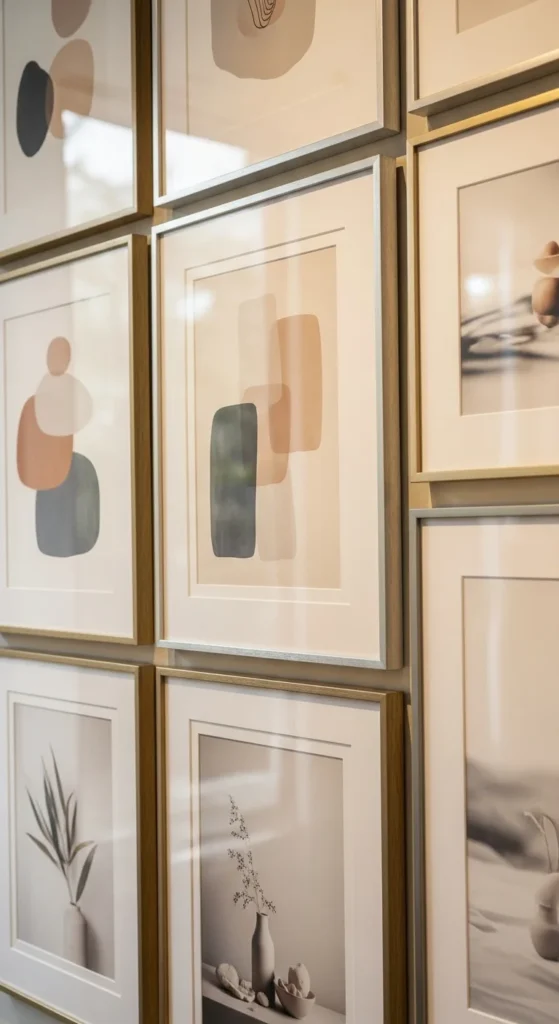
- Use similar mat styles.
- Repeat certain sizes throughout the layout.
This balance makes the wall feel layered and rich without looking messy.
Curate What Goes Inside the Frames
What you frame matters just as much as the frames themselves. A professional gallery wall tells a story.
Ideas that work beautifully together:
- Personal photos edited in similar tones
- Minimal art prints
- Abstract shapes or line drawings
- Nature-inspired imagery
- Typography-style art without actual words visible in photos
Tip: If your images feel too busy, add a few simple or blank-toned prints to give the eye a place to rest.
Hang at the Right Height
This is a common mistake. Gallery walls should be hung at eye level—not too high, not too low.
A good rule:
- The center of your gallery wall should sit around 57–60 inches from the floor.
- If it’s above furniture, leave 6–8 inches of space between the furniture and the lowest frame.
This creates visual balance and keeps the wall connected to the room instead of floating awkwardly.
Finish With Styling Touches
Designers think beyond the frames. Small styling details make the wall feel complete.
Consider:
- A nearby plant to soften the look
- A bench, console, or chair beneath the wall
- Subtle lighting like a picture light or nearby lamp
These elements help anchor the gallery wall and make it feel like part of a larger, well-designed space.
Final Takeaway
A professionally designed gallery wall isn’t about perfection—it’s about intention. Plan your layout, stay consistent, and take your time choosing pieces that truly fit your space. When done thoughtfully, your gallery wall becomes more than décor—it becomes a reflection of your style.
Save this guide for later, and start designing a gallery wall you’ll love seeing every day!

Leave a Reply