

Working from home sounds ideal—until distractions pile up and your focus starts slipping. A well-designed home office can completely change how you work, think, and feel throughout the day. The good news? You don’t need a huge room or expensive upgrades. With a few smart choices, you can create a space that boosts productivity and actually makes you want to sit down and get things done.
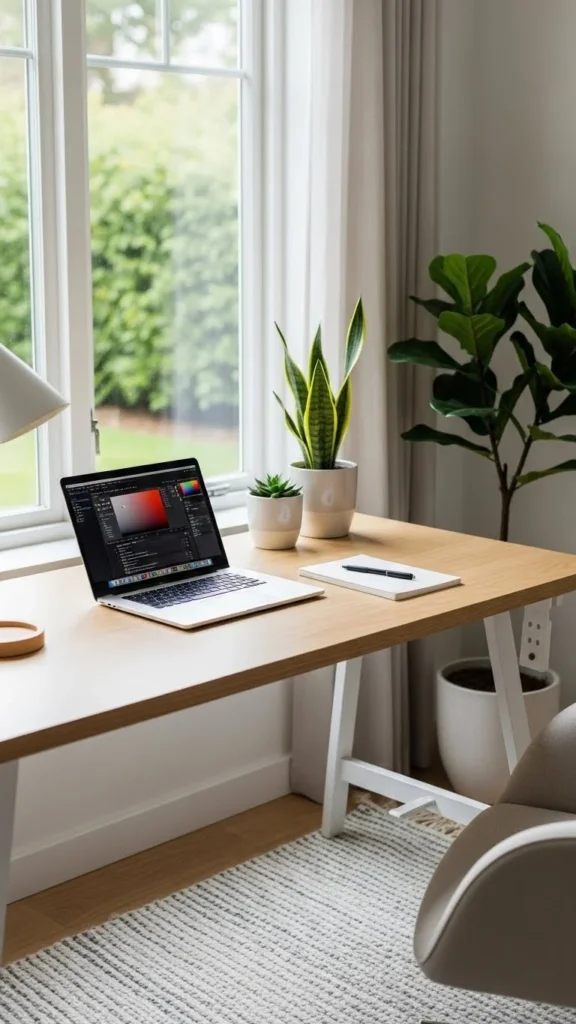
Choose the Right Location First
Before buying furniture or decor, decide where your home office will live. The location sets the tone for your entire workday.
If possible, choose a spot that:
- Gets natural light
- Is away from heavy foot traffic
- Can be mentally “switched on” for work
Even a small corner can work if it’s clearly defined. Use a rug, a bookshelf, or a desk facing the wall to create separation between work and home life.
Avoid working from the couch or bed long-term. These spaces signal relaxation, not focus, and can quietly drain productivity.
Invest in a Comfortable, Supportive Desk Setup
Your desk setup is where productivity either thrives or struggles. Comfort and ergonomics matter more than aesthetics here.
Focus on:
- A desk at the right height for your arms
- A chair that supports your lower back
- Enough surface space to work without clutter
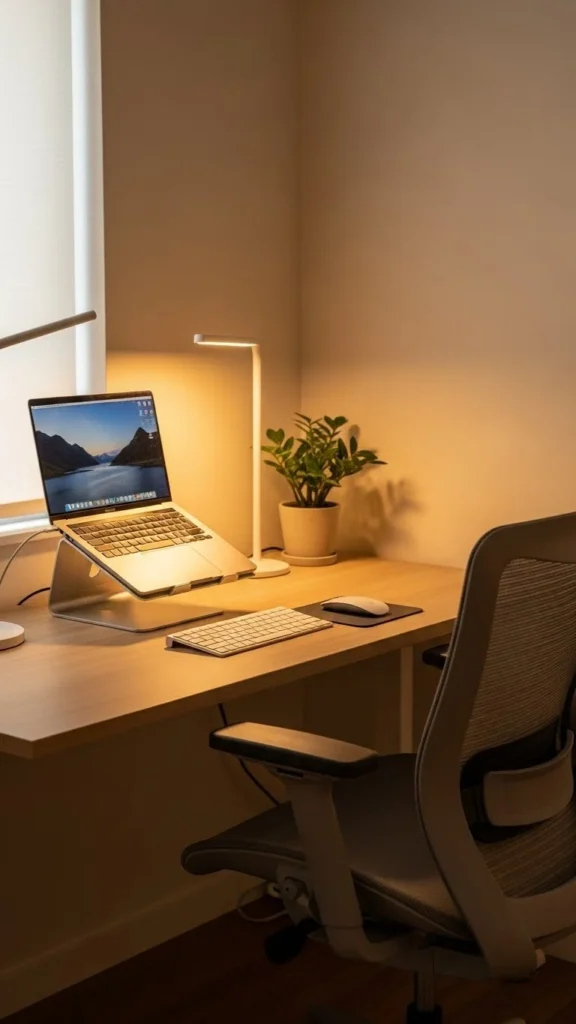
Small adjustments make a big difference:
- Keep your screen at eye level
- Sit with feet flat on the floor
- Rest elbows at a comfortable angle
When your body feels good, your focus lasts longer.
Declutter to Clear Your Mind
Visual clutter leads to mental clutter. A productive home office feels calm, not chaotic.
Start by removing anything you don’t use daily. Then organize what remains with intention.
Helpful decluttering tips:
- Use drawer organizers for small items
- Store paperwork in labeled folders
- Keep only daily essentials on your desk
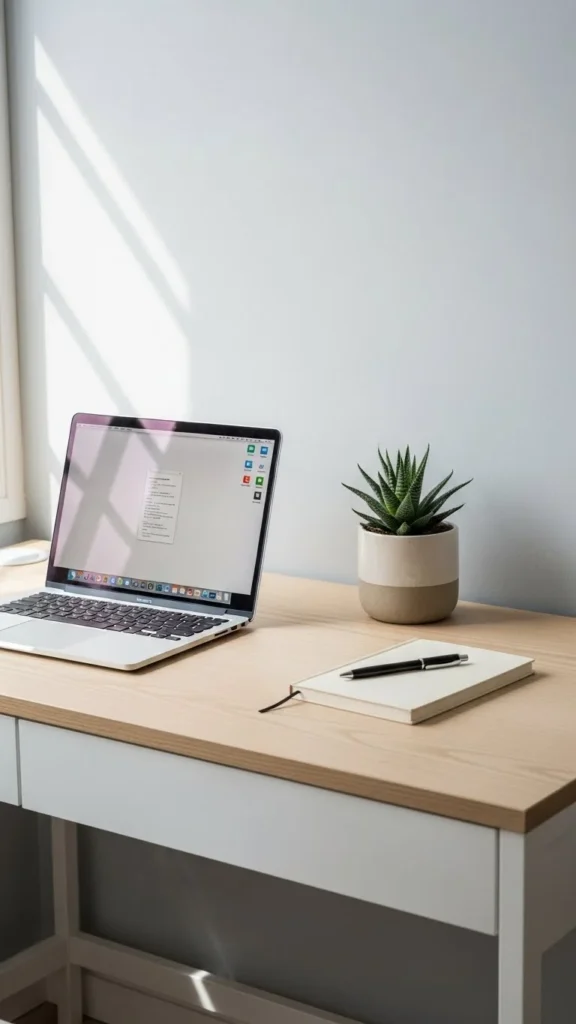
Aim for “clean but lived-in.” A few personal touches are great, but everything should have a purpose.
Use Lighting That Supports Focus
Lighting affects energy levels more than most people realize. Poor lighting can cause eye strain, fatigue, and loss of focus.
A productive setup includes:
- Natural light during the day
- A desk lamp for focused tasks
- Soft ambient light for balance
Place your desk near a window if possible, but avoid glare directly on your screen. Choose warm-neutral bulbs that feel comfortable, not harsh.
Good lighting keeps you alert without overwhelming your space.
Add Simple Productivity-Boosting Decor
Decor isn’t just about looks—it shapes how you feel while working.
Choose items that inspire calm and motivation:
- Indoor plants for freshness
- Neutral or soft colors for walls and decor
- One or two meaningful personal items
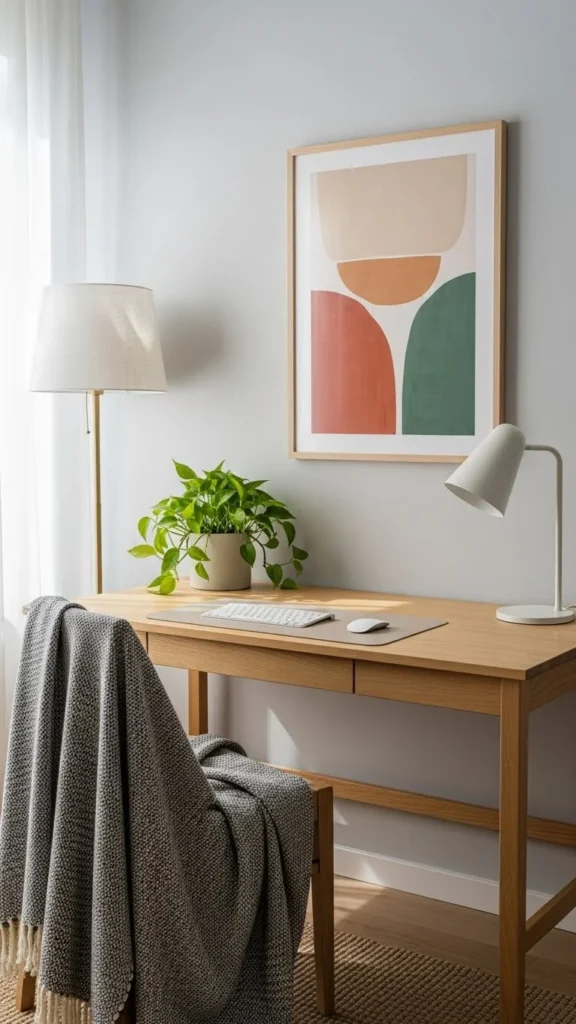
Avoid overcrowding shelves or walls. Less visual noise helps your brain stay on task.
Build Smart Storage and Organization Systems
A productive office makes it easy to stay organized without effort. When everything has a place, tidying takes seconds instead of minutes.
Smart storage ideas:
- Floating shelves for books and decor
- File boxes for paperwork
- Cable organizers to reduce mess
Keep frequently used items within arm’s reach and less-used items tucked away. This flow saves time and reduces frustration throughout the day.
Create a Routine-Friendly Setup
Your home office should support how you work, not fight it.
Think about:
- Where you write, type, or brainstorm
- Where you keep planners or calendars
- How you start and end your workday
A consistent setup helps your brain associate the space with focus. Sitting down becomes a cue to get things done.
Even small rituals—like lighting a lamp or opening a notebook—can boost productivity.
Final Takeaway
A productive home office isn’t about perfection—it’s about intention. Choose the right location, prioritize comfort, keep clutter under control, and design a space that supports your daily workflow.
Start small. Adjust as you go. Your focus will thank you.
Save this guide for later and start upgrading your home office one smart step at a time.

Leave a Reply