

Sharing a bedroom can be a beautiful thing—built-in companionship, late-night giggles, and a space that grows with your kids. But when toys, clothes, and collections start to pile up, a shared room can quickly feel chaotic. The good news? You can create a room that feels calm, organized, and fun—without stripping away personality.
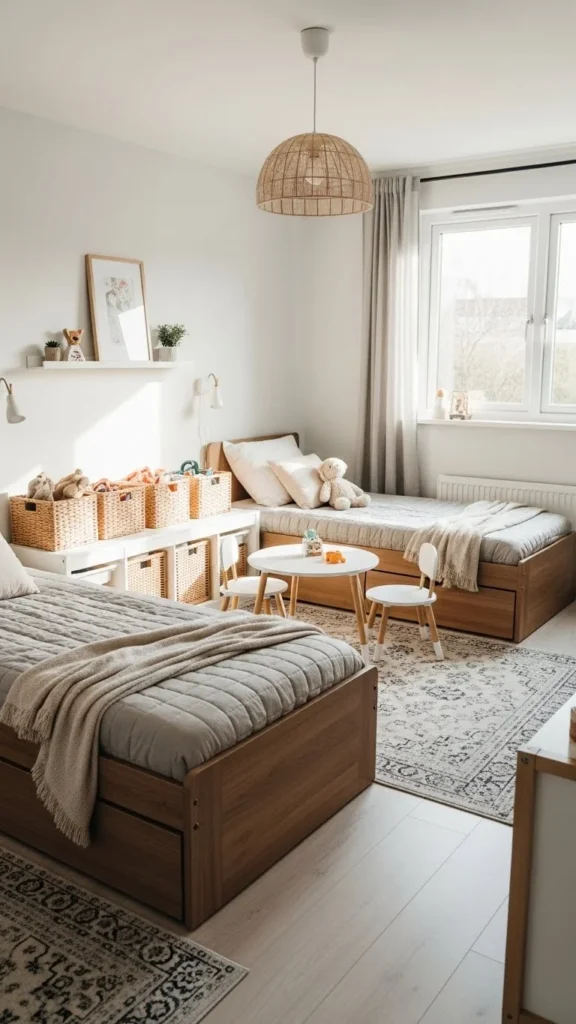
Below is a simple, parent-friendly approach to decorating a shared kids’ room that stays clutter-free while still feeling warm and playful.
Start With a Clear Layout Plan
Before adding décor, take a step back and look at the room itself. A thoughtful layout prevents clutter before it even starts.
Ask yourself:
- Where will each child sleep?
- Where will toys live?
- Where do clothes and school items belong?
Layout tips that work:
- Place beds against walls to open up floor space.
- Use bunk beds or daybeds if the room is small.
- Keep the center of the room open for play.
When every area has a purpose, kids are less likely to scatter things everywhere.
Create Personal Zones for Each Child
One major cause of clutter in shared rooms is confusion over ownership. Giving each child a defined space helps them stay organized—and feel respected.
Simple ways to divide space:
- Assign each child a bedside shelf or small nightstand.
- Use color accents to mark personal zones.
- Give each child their own drawer or basket.
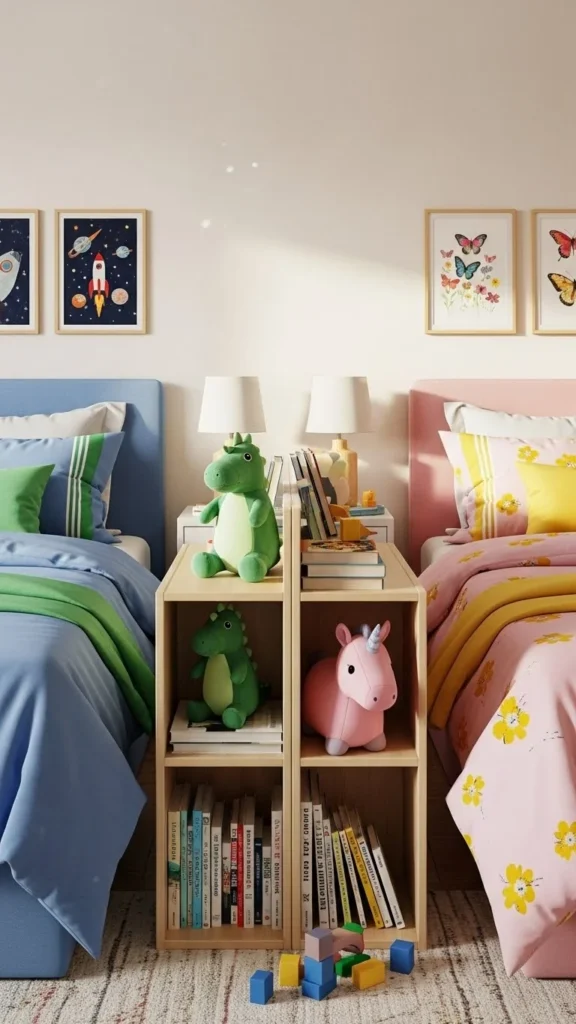
This doesn’t mean building walls. Even subtle visual separation goes a long way.
Choose Smart Storage That Blends In
Storage doesn’t have to look bulky or boring. The best clutter-control solutions double as décor.
Kid-friendly storage ideas:
- Under-bed bins for seasonal clothes or toys
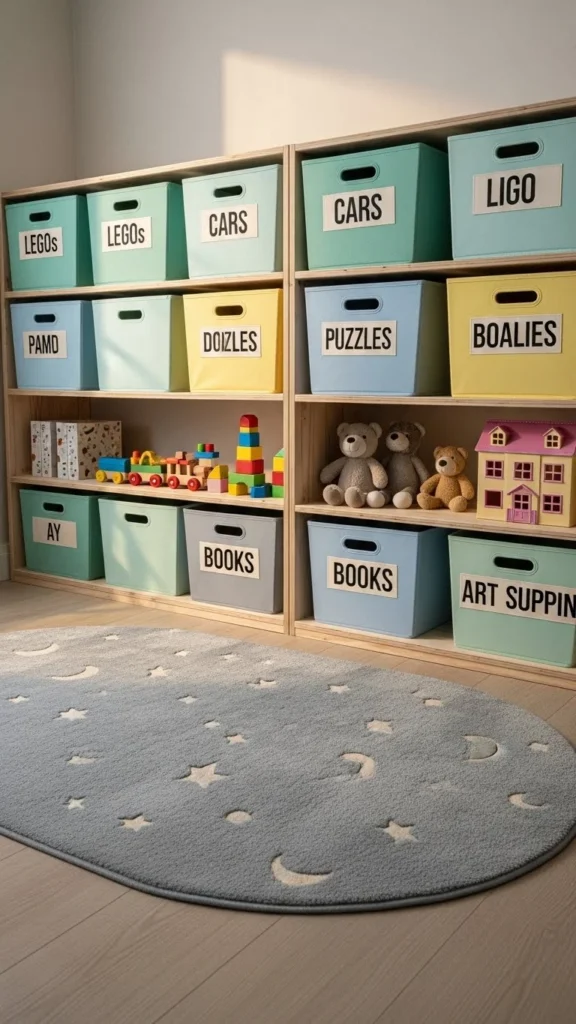
- Cube shelves with fabric bins
- Benches with hidden storage inside
- Wall hooks for backpacks and jackets
Keep storage easy to reach. If kids can grab and return items themselves, cleanup becomes part of daily life—not a battle.
Keep the Color Palette Calm and Cohesive
Too many colors can make a room feel busy—even when it’s tidy. A calmer palette helps the space feel more open and organized.
Try this formula:
- Base colors: white, beige, soft gray
- Accent colors: two child-approved shades
- Patterns: limit to one or two
You can still let kids express themselves through pillows, artwork, or bedding without overwhelming the room.
Rotate Toys Instead of Displaying Everything
You don’t need every toy on display all the time. In fact, fewer visible items often mean more focused play.
How to rotate toys:
- Keep a few favorites accessible.
- Store the rest in bins or a closet.
- Swap toys every few weeks.
This keeps shelves neat and makes old toys feel exciting again—without adding new ones.
Use Vertical Space to Free the Floor
When floor space is limited, look up. Vertical storage keeps clutter off the ground and makes rooms feel bigger.
Smart vertical ideas:
- Wall-mounted bookshelves
- Pegboards for art supplies
- Hanging fabric organizers
- Tall wardrobes with labeled sections
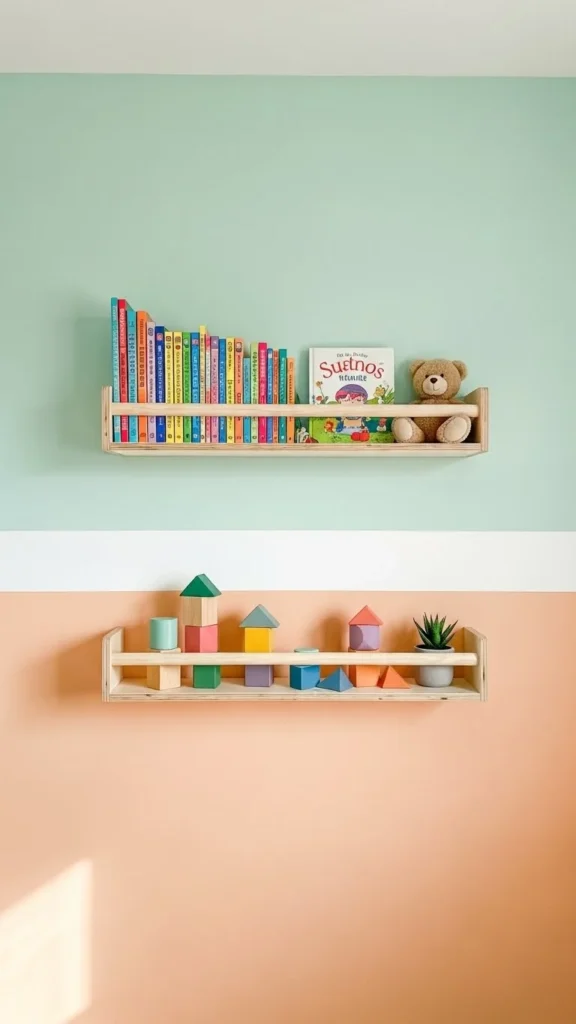
Just be sure everything is securely mounted and age-appropriate.
Display Art With Intention
Kids’ artwork is precious—but too much can feel messy. Curate it like a gallery instead of taping everything to the walls.
Try this:
- Frame a few favorite pieces.
- Use a wire or clip rail to rotate art.
- Keep extra drawings in a memory box.
This keeps walls tidy while still celebrating creativity.
Make Daily Cleanup Simple and Predictable
Even the best décor won’t help if cleanup feels overwhelming. Build routines that fit your kids’ ages.
Clutter-reducing habits:
- Five-minute nightly tidy-up
- One bin per category (toys, books, crafts)
- Clear labels or picture labels for younger kids
When cleanup is quick and predictable, clutter doesn’t stand a chance.
Choose Decor That Grows With Them
Avoid overly themed décor that will feel outdated in a year. Instead, invest in flexible pieces.
Look for:
- Neutral furniture
- Removable wall decals
- Timeless bedding styles
This reduces future clutter from constant redecorating and keeps the room feeling fresh longer.
Final Takeaway
Decorating a shared kids’ room without clutter is all about intention—not perfection. Clear zones, smart storage, calm colors, and simple routines create a space where kids can play, rest, and grow together comfortably.
Save this guide for later, and enjoy a shared room that feels peaceful and practical.
Leave a Reply