

Wallpaper has a way of making a room feel finished almost instantly. One wall, one pattern, and suddenly the space has personality, depth, and intention. Whether you’re decorating a rental, refreshing a tired room, or craving a bold change without major work, wallpaper can be one of the easiest upgrades you’ll ever make.
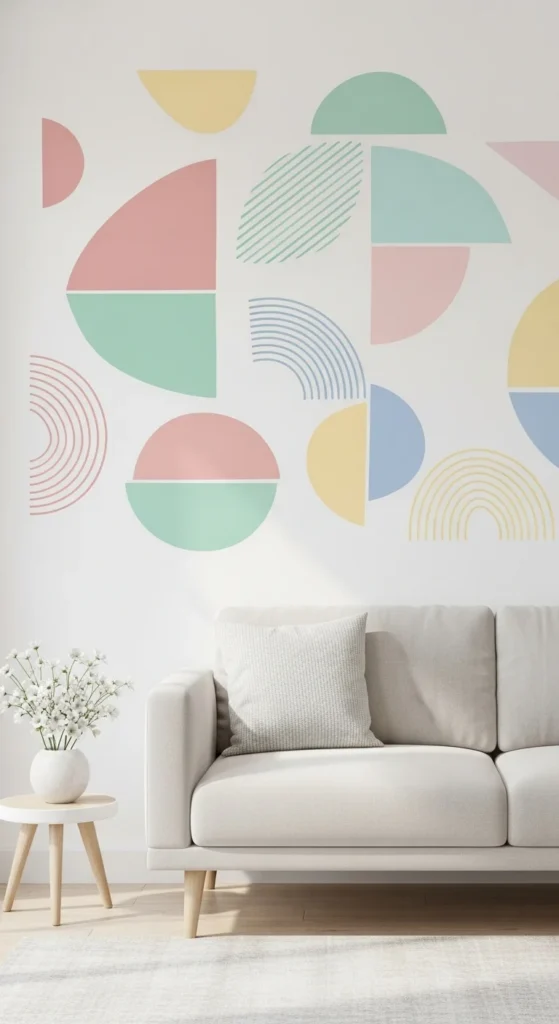
Below is a simple, step-by-step guide to using wallpaper confidently—even if you’ve never tried it before.
Start With the Right Wall
You don’t need to wallpaper an entire room to see a big impact. In fact, starting small often looks more intentional.
Great beginner-friendly wall choices:
- The wall behind a bed or sofa
- A dining room focal wall
- An entryway wall that greets guests
- A small powder room for a bold statement
Choosing one main wall helps the pattern stand out without overwhelming the space. It also keeps costs lower and installation faster.
Choose a Pattern That Matches the Room’s Mood
Wallpaper sets the tone, so think about how you want the room to feel.
Popular style directions:
- Calm and airy: soft florals, light textures, neutral tones
- Modern and bold: geometric patterns, high contrast colors
- Cozy and warm: linen-look textures, subtle stripes
- Playful: small-scale prints, whimsical motifs
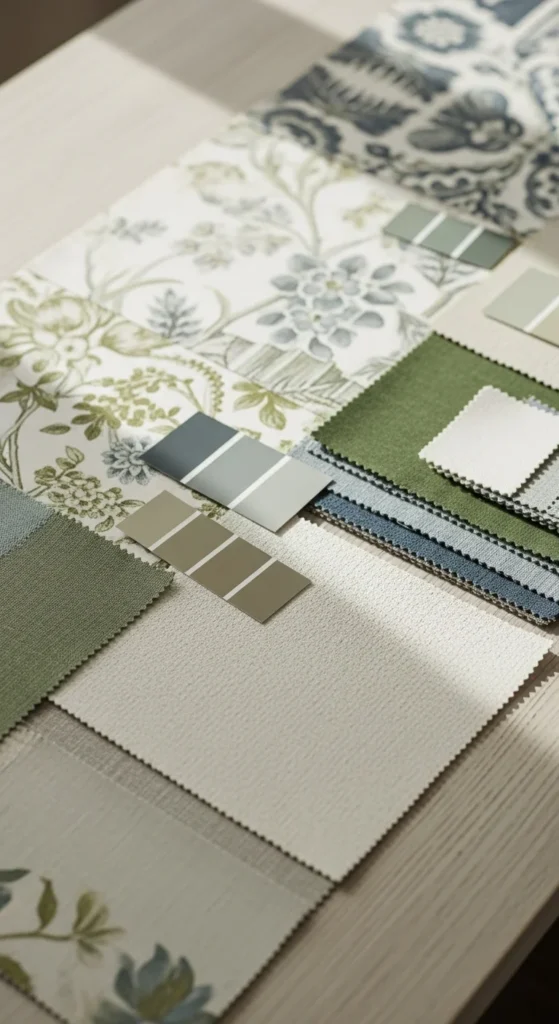
Tip: If your furniture is simple, you can go bolder with wallpaper. If your room already has strong colors or patterns, choose something more subtle.
Peel-and-Stick vs Traditional Wallpaper
Not all wallpaper works the same way, and choosing the right type makes the process much easier.
Peel-and-stick wallpaper
- Great for renters
- Easy to reposition
- Minimal tools required
- Best for smooth walls
Traditional wallpaper
- More permanent
- Often more durable
- Requires paste and prep
- Ideal for long-term makeovers
If you’re nervous, peel-and-stick is the easiest place to start. It’s forgiving and perfect for experimenting.
Prep the Wall for a Smooth Finish
Even the prettiest wallpaper won’t look good on an unprepared wall.
Before you begin:
- Clean the wall to remove dust and residue
- Patch small holes or cracks
- Make sure the wall is completely dry
- Remove outlet covers and switch plates
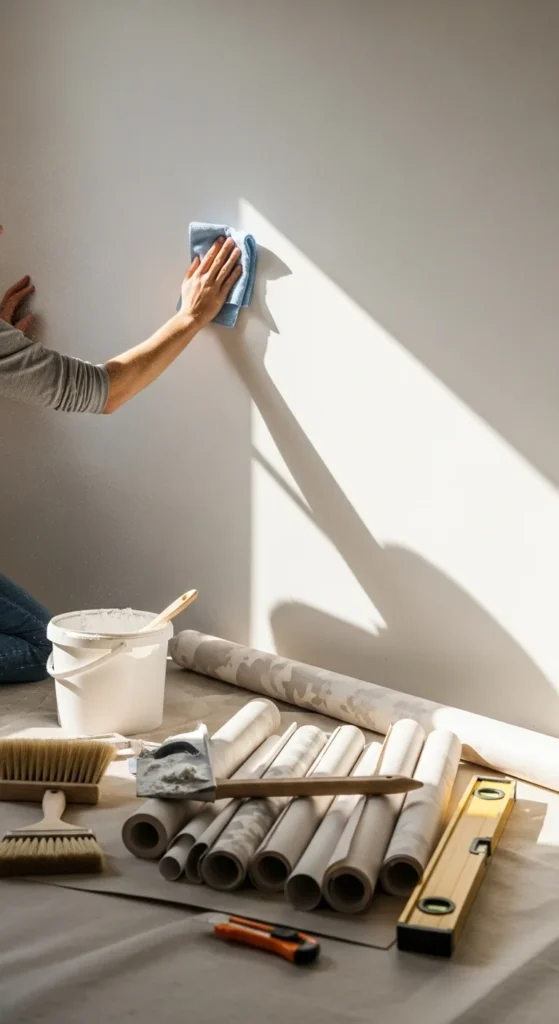
Taking a little time here prevents bubbles, peeling edges, and uneven lines later.
Apply Slowly and Measure Carefully
Wallpaper rewards patience. Rushing almost always shows.
Helpful application tips:
- Measure and cut panels before starting
- Use a level to keep patterns straight
- Smooth from the center outward
- Work in small sections
If a piece goes on crooked, gently peel it back and try again. Most modern wallpapers allow repositioning, especially peel-and-stick styles.
Use Wallpaper in Unexpected Places
Wallpaper doesn’t have to stay on main walls. Some of the most stylish spaces use it creatively.
Try wallpapering:
- The back of open shelves
- Inside closets
- Hallways or stair walls
- Small nooks or reading corners
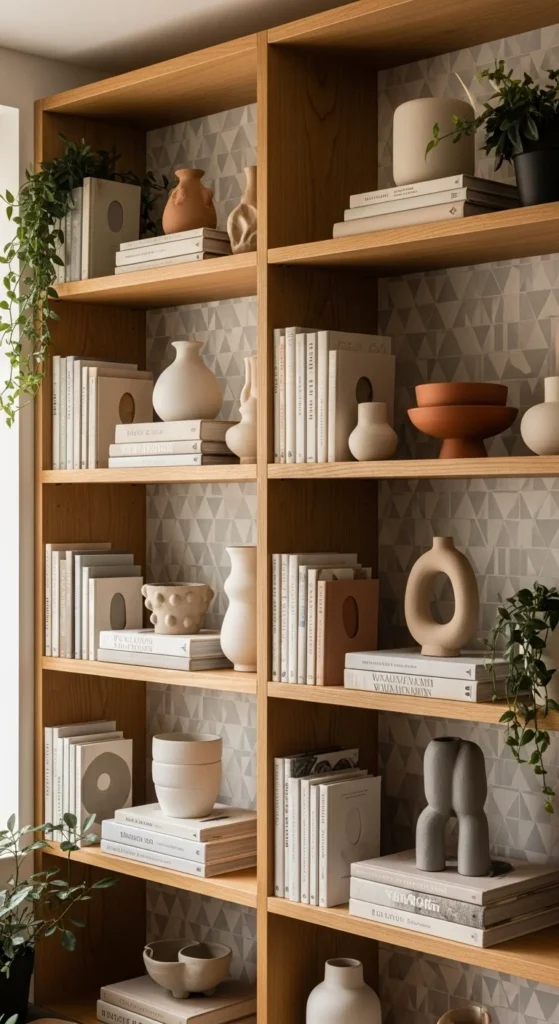
These small applications add charm without committing to a full wall.
Balance the Room After Installation
Once the wallpaper is up, let it shine. Adjust the rest of the room to support it.
Simple balance tips:
- Pull one color from the wallpaper into pillows or throws
- Keep surrounding walls neutral
- Avoid adding too many competing patterns
- Use simple frames and decor nearby
Think of wallpaper as the star, not one of many competing elements.
Make It Feel Intentional, Not Trendy
Trends come and go, but a well-chosen wallpaper can feel timeless.
To avoid quick regret:
- Choose patterns you’d enjoy long-term
- Stick with colors you already love
- Avoid ultra-trendy motifs unless used in small spaces
If you love it now and can imagine loving it later, you’ve made the right choice.
Final Takeaway
Wallpaper is one of the easiest ways to completely change how a room feels—without major renovations or stress. Start with one wall, choose a pattern that fits your mood, take your time during installation, and let the design do the work for you.
Save this guide for later, and don’t be afraid to try wallpaper—you might be surprised how simple it really is.
Leave a Reply