

Designing a studio apartment can feel tricky at first. One room has to do everything: sleep, relax, work, eat, and store your life. But with smart choices, a small space can feel intentional, stylish, and surprisingly functional. The secret isn’t having more square footage—it’s making every inch work harder while still feeling like home.
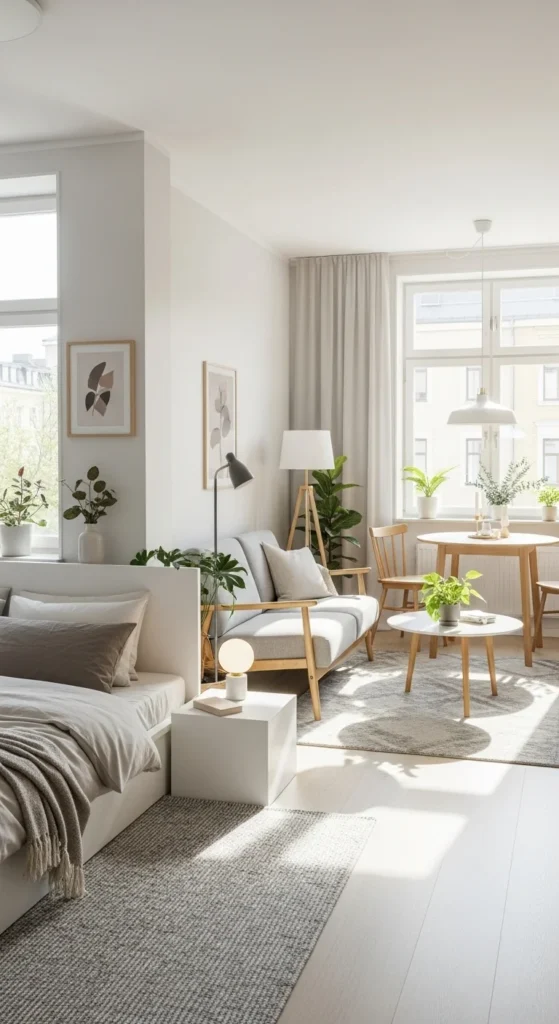
Start With Clear Zones (Even Without Walls)
A studio works best when it feels organized. That starts by visually dividing the space into zones, even if there are no actual walls.
Think in terms of:
- Sleeping zone
- Living zone
- Work or dining zone
You can create separation using simple tools:
- Area rugs to anchor each zone
- A sofa placed with its back toward the bed
- A tall bookshelf or open shelving as a divider
This approach helps your apartment feel larger and more intentional. When each area has a purpose, the whole space feels calmer and easier to live in.
[Image Prompt] A small studio apartment using a bookshelf and area rug to divide the sleeping and living areas, with soft lighting and layered textures.
Choose Furniture That Does Double Duty
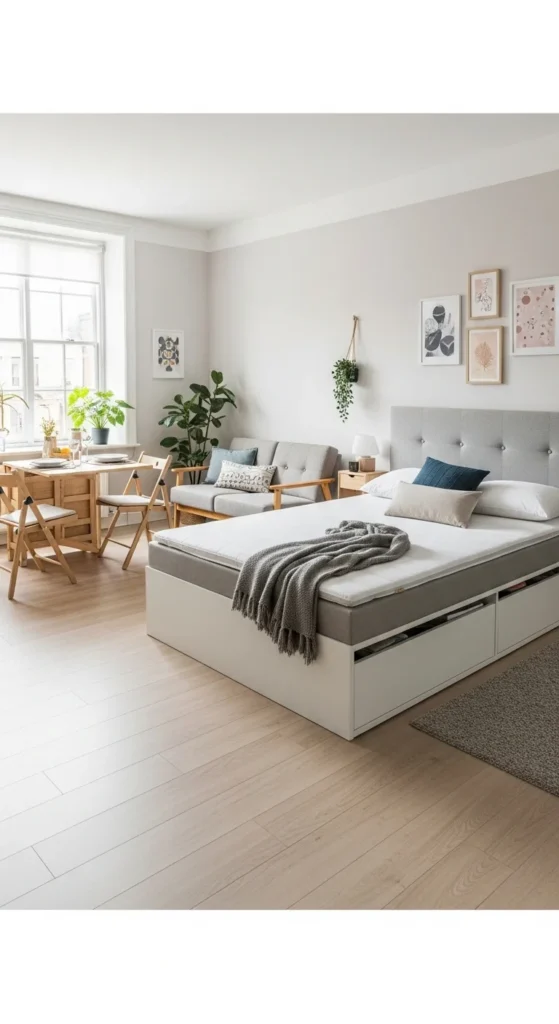
In a studio apartment, furniture should earn its place. Pieces that serve more than one function save space and reduce clutter.
Smart picks include:
- A storage bed with drawers underneath
- An ottoman that opens for storage
- A dining table that folds down when not in use
- A sofa with a slim profile instead of bulky arms
Look for furniture with legs. Seeing space underneath makes the room feel lighter and more open. Avoid oversized items, even if you love them. Scale matters more in a studio than anywhere else.
Stick to a Cohesive Color Palette
Color can either unify a studio—or make it feel chaotic. The easiest approach is to stick to one main palette throughout the space.
A simple formula:
- One main neutral (white, beige, soft gray)
- One secondary tone (warm wood, muted green, soft clay)
- One or two accent colors
Using the same colors across all zones helps the apartment feel bigger and more polished. You can still add personality through texture, patterns, and small decor pieces.
If you love bold colors, keep them to accents like:
- Throw pillows
- Wall art
- Lamps or decor objects
Maximize Vertical Space
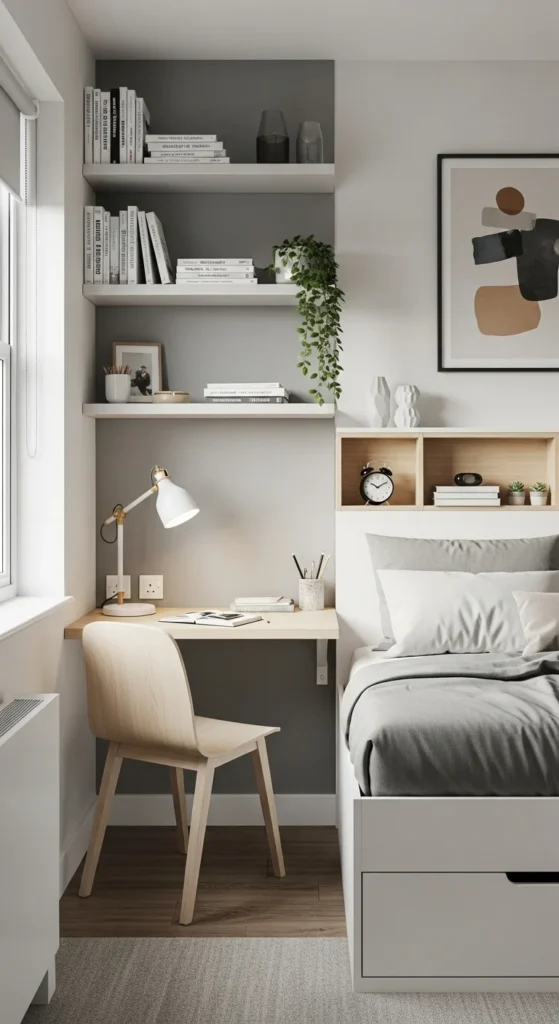
When square footage is limited, go up. Vertical storage keeps the floor clear and makes the room feel taller.
Ideas that work well in studios:
- Wall-mounted shelves
- Tall wardrobes instead of wide ones
- Hooks for bags, hats, or jackets
- Floating nightstands
This strategy is especially useful near the entry area or around the bed. Just remember to leave some breathing room—too much on the walls can feel overwhelming.
Use Lighting to Set the Mood
Good lighting can completely change how a studio feels. Relying on one ceiling light usually makes the space feel flat.
Instead, layer your lighting:
- A floor lamp for the living area
- A table lamp or wall sconce near the bed
- Task lighting for a desk or kitchen corner
Warm light creates a cozy vibe, especially in the evening. Lighting also helps define zones, just like rugs and furniture placement.
Keep Decor Intentional, Not Excessive
Decor brings personality, but in a studio, less really is more. Choose pieces that matter to you instead of filling every surface.
Try this approach:
- One statement artwork instead of many small frames
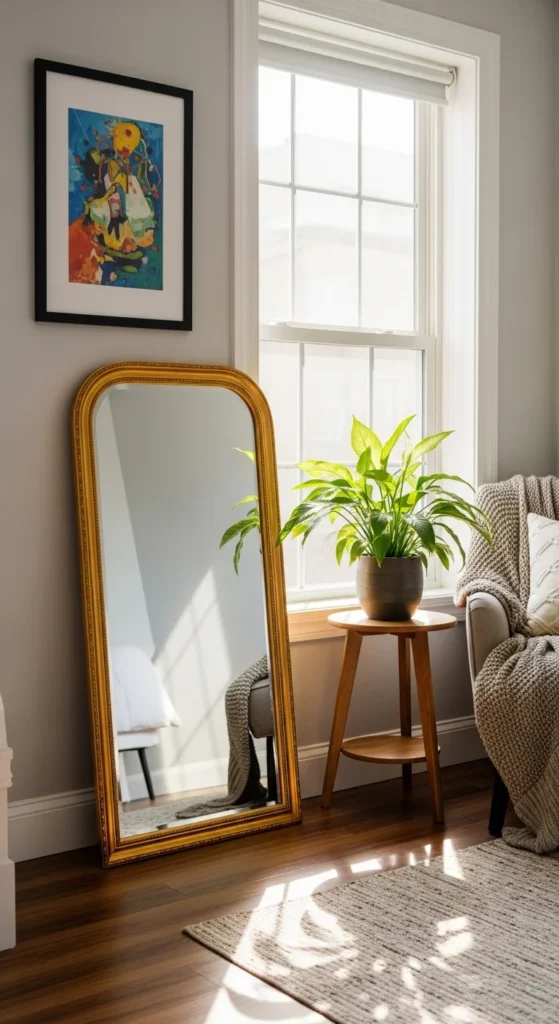
- A mirror to reflect light and visually expand the space
- A few plants to add life and softness
Rotate decor seasonally if you love variety. This keeps your space feeling fresh without adding clutter.
Don’t Forget Hidden Storage
Storage is what makes a studio livable long-term. Look for spots that are often overlooked:
- Under the bed
- Inside benches or ottomans
- Above doors or closets
Baskets and storage boxes keep things tidy while still looking stylish. When everything has a home, your studio feels calmer and easier to maintain.
Final Takeaway
Designing a studio apartment is all about smart choices and thoughtful layering. Clear zones, multi-purpose furniture, cohesive colors, and intentional decor can turn even the smallest space into a stylish, functional home.
You don’t need more room—you just need a better plan.
Save this guide for later and start transforming your studio one small change at a time.
Leave a Reply